
“Moon, Metal, and Motherland: Cold War Hollywood” - Star City (2026) Series

Soviet cosmonauts, engineers, and intelligence officers risk everything in an ambitious space program aiming to be the first to reach the moon.
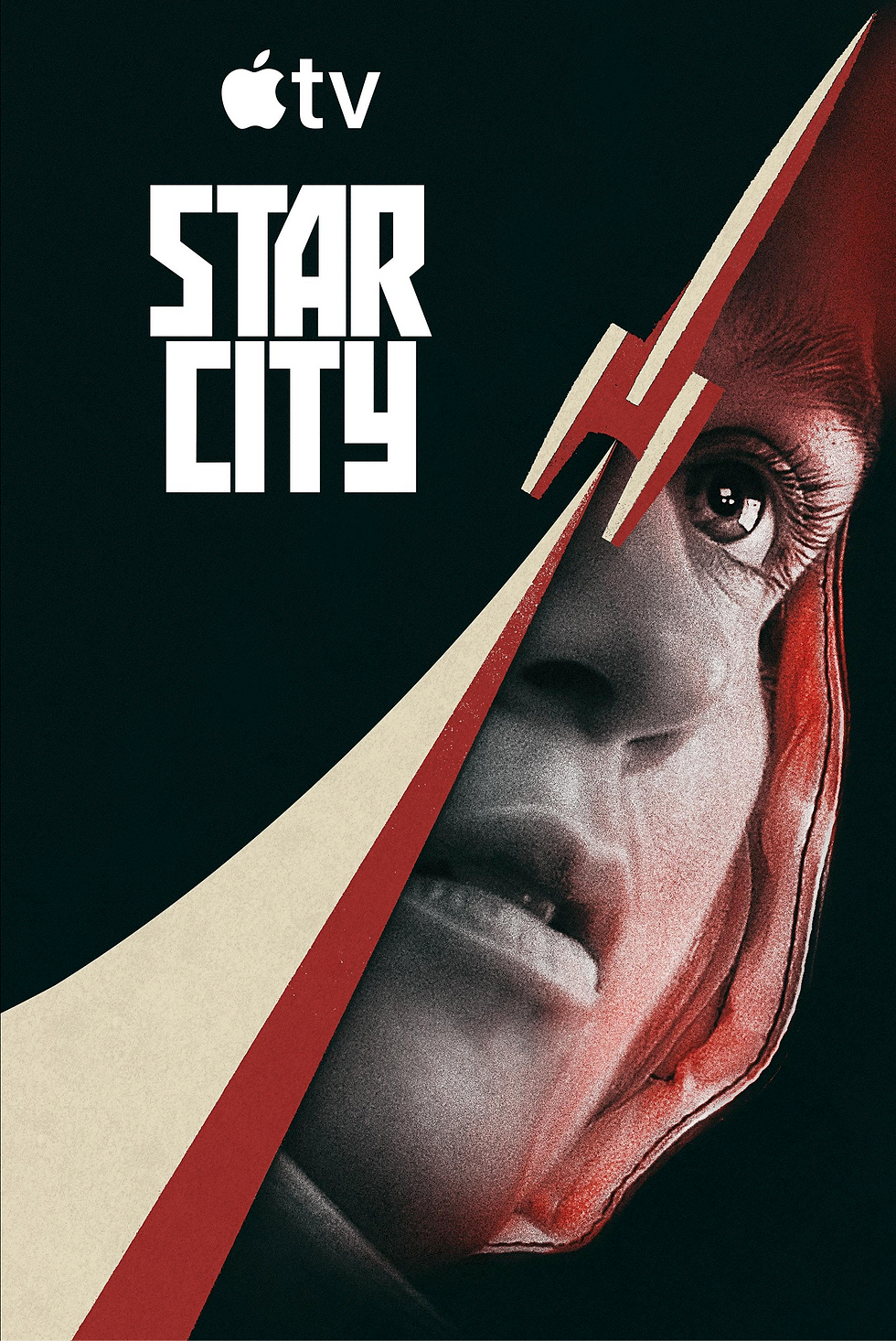
I’ve just blasted through Star City – Apple TV+’s Soviet spin on the space race – and let me tell you, it’s a cosmic cocktail of Cold War paranoia and Moonshot ambition. The basic pitch is a riff on For All Mankind: in this alt-history, Russia planted the first boot in lunar dust, and now we get to see the victory parade on the other side of the Iron Curtain. From the jump, you know it’s going to be darker and grittier – the PR folks even call it a “propulsive, paranoid thriller”. And they’re not kidding. As a blogger-slash-space-race nerd, I’m the target audience here, and I’m both excited and terrified – in Soviet Russia, the Moon landing may rocket you up or bury you under a bunker.
What immediately struck me was how Star City wears its chilly palette on its sleeve. There’s no glossy NASA blue anywhere in sight. If anything, it looks like someone filtered the show through a stack of smoky grays and military greens. Even the snow looks exhausted. It’s the anti-Apollo 13 aesthetic: think a mix of Chernobyl and Severance with a handful of vodka as a prop. You almost feel like you need a Geiger counter just to watch it. (Spoiler: don’t get me started on how awesome the set designers are. Seriously, those cramped control rooms and cold barracks – I half expect Lenin’s ghost to pop up knitting a sweater.)
As for the actors: Rhys Ifans (yes, that Rhys Ifans from House of the Dragon) plays the mysterious “Chief Designer” of the Soviet space program. He’s basically the genius behind the rockets, very much channeling the real-life Korolev’s aura. Ifans brings a weird warmth to this role – you catch fleeting smiles and moments of idealism before the hard-eyed regime sucks them out of him. It’s kind of like watching a hedgehog try to deliver Christmas presents; the porcupine definitely gets pricked along the way. And make no mistake, this Chief Designer has obstacles stacked up like missile silos – from political sabotage to the ever-hungry KGB always itching for control. By episode 2, you realize this isn’t light year fun, it’s survival. Star City is less about space drama and more “Chernobyl: The Cold War Edition” – tense, somber, and fraught. No kidding. Ifans’ character is driving everything forward, yes, but even he is trapped in the party’s crosshairs.
Opposing him is Colonel Lyudmilla Raskova, terrifyingly portrayed by Anna Maxwell Martin. She’s the KGB surveillance chief – picture a Soviet Ripley from Aliens if Ripley had had a childhood in Siberia. We learn she once slew over a hundred Nazis in World War II, so yes, she doesn’t need your sympathy. Though chilling, Martin also imbues Lyudmilla with nuanced drive – she genuinely thinks she’s guarding the motherland, even if it means intimidating or worse. (In a clever touch, her young KGB protege Irina Morozova – played by Agnes O’Casey – enters the scene as a meek typist, but we see hints she might not stay meek for long.) Speaking of O’Casey, she delivers an eerie quiet strength as Irina. The pair’s banter, usually over tea or radio static, is one of Star City’s underappreciated thrills; it’s almost a buddy cop dynamic if the cops carried grenades and shared a telepathic bond.
What really won me over: you don’t need to have watched For All Mankind to get this. Sure, fans of that show will treat Star City like a Russian vodka martini at the same cocktail party – it’s familiar ingredients but with a twist. Apple TV officially says it “expands the world of For All Mankind”, but creatively it’s its own beast. The timeline starts in 1969, right after the Soviet flag plants on the Moon in the FAM universe, and then it digs into the consequences. It feels bold in that it won’t hold your hand – if you like your TV shaken, not stirred, you’ll appreciate the punch. There are scenes of interrogations that would make Jack Bauer say, “Whoa, dial it back.” People who trust too easily here don’t last long (and yes, I do mean everyone can get got, plot spoiler warning though: not everyone survives this Moon race).
Visually, everything looks great – like… great in a wartime bunker-chic way. The cinematography loves long, steely shots of control panels and freezing cosmonaut squads. (By the way, if you hear a memo screaming “Backdrop of respirators,” that’s just me fangirling.) They even nailed the little details: desaturated lighting makes the glass gauges and monitors glow like cold neon, and the archival footage of rockets launching will give history buffs chills. The costume and set folks deserve a salute – it’s as if they crammed a whole Soviet history museum onto my screen, and I kinda wanna go back with binoculars.
Also, bonus points: the cast is fun if not exactly Spielberg-famous. Aside from Ifans and Martin, you’ve got folks like Alice Englert (as Cosmonaut Anastasia Belikova) and Adam Nagaitis, and they mostly let the characters speak for themselves. It’s refreshing. When was the last time a major TV show looked almost entirely like a BBC drama crossed with Mad Men? These actors may not have been Hollywood headliners, but they act circles around some famous superstars. In a sense, Star City trusts us to care about ordinary extraordinary people. It’s a smart move; no overblown cameos pulling focus, just a tight ensemble.
Now, I’ll get to my petty complaints, because what kind of snarky blogger would I be if I didn’t grumble a bit? Firstly, the pacing can feel… patient. Yes, space drama fans, I said “patient.” It takes its time building the tension rather than zooming from launch to splashdown. Think of it like watching how-to survive-the-Apocalypse rather than a space-race sprint. Some days I sighed at the deliberate rhythm (“Come on, Soviet storyboard, put on the afterburners!”), but the truth is that waiting only makes the payoff bigger. By slowing down, Star City makes every leak, confession, or eyebrow raise feel like it could launch a rocket in itself. Patience, as they say, is a virtue – or at least, one more office skill in a communist archive.
Secondly, and this is a tongue-in-cheek gripe inspired by far too many international shows: Star City has folks speaking Russian. I know, heresy, right? In this modern age of AI dubs and multi-language Netflix, it’s maddening I have to read subtitles on my living room TV. I half expect an app that speaks for the characters as if I’m tuning into an alien broadcast. (I’m not saying I wouldn’t personally enjoy absorbing the vibes of Russian language circa 1969, but I am saying I’m lazy.) It’s a bit like reading War and Peace in original Russian with no Rosetta Stone – classically authentic, but a pain if you’d rather binge with popcorn.
On the whole, Star City digs deep rather than high. It’s the kind of adult story-telling where the dialogue leaves out none of the nuance – sci-fi action meets KGB politics, and very occasionally a slash of dark humor. Imagine a Dennis Miller monologue if Dennis Miller was living in a snowbound gulag and cared about gravitational pull. The show reminds me that the only thing more complex than rocket science is surviving in this cast’s cocked-and-loaded Cold War. I’m walking away both satisfied and craving more: it’s clever enough to keep non-sci-fi heads nodding, but it’s definitely written with an adult audience in mind. No silly side characters breaking for laugh tracks here.
All this said, I’m not going to pretend Star City was flawless. A few episodes feel like they float in orbit a bit before descending, and the heavy seriousness sometimes leaves me longing for even a smidge of levity (because even Red Square could use a comic relief tourist once in a while). But those are minor quibbles. It largely delivers a character-driven gut-punch with a side of astrophysics, and the whole ordeal culminates in that uniquely bizarre satisfaction of rooting for characters who are rooting for Uncle Joe’s regime.
So, what’s the verdict from someone who usually prefers rockets to revolutions? I’ll tell you bluntly: Star City is damn enjoyable. It’s moody, it’s menacing, and it’s oddly heartwarming to see people bond under constant suspicion (a true socialist miracle). After bingeing the premiere episodes, I found myself unconsciously humming the Russian national anthem in minor key. It stays with you. Critics have been mostly in orbit over it – it’s got a 97% on Rotten Tomatoes as I write this, and I can see why: the show’s got ambitions (pun intended), and it mostly achieves them. I’d score it a solid 7.5/10 – it’s the kind of series that creeps up on you, plants a flag in your weekend, and wouldn’t let you down even if Khrushchev came back demanding revisions.


Comments